5 hr
Uluru Sunrise & Kata Tjuta Explorer from Yulara
- Entry ticket
- Mobile voucher
- Valid same day
- Free cancellation
Kata Tjuta Sunrise Tour — Guided Dune Viewing & Domed Ridges
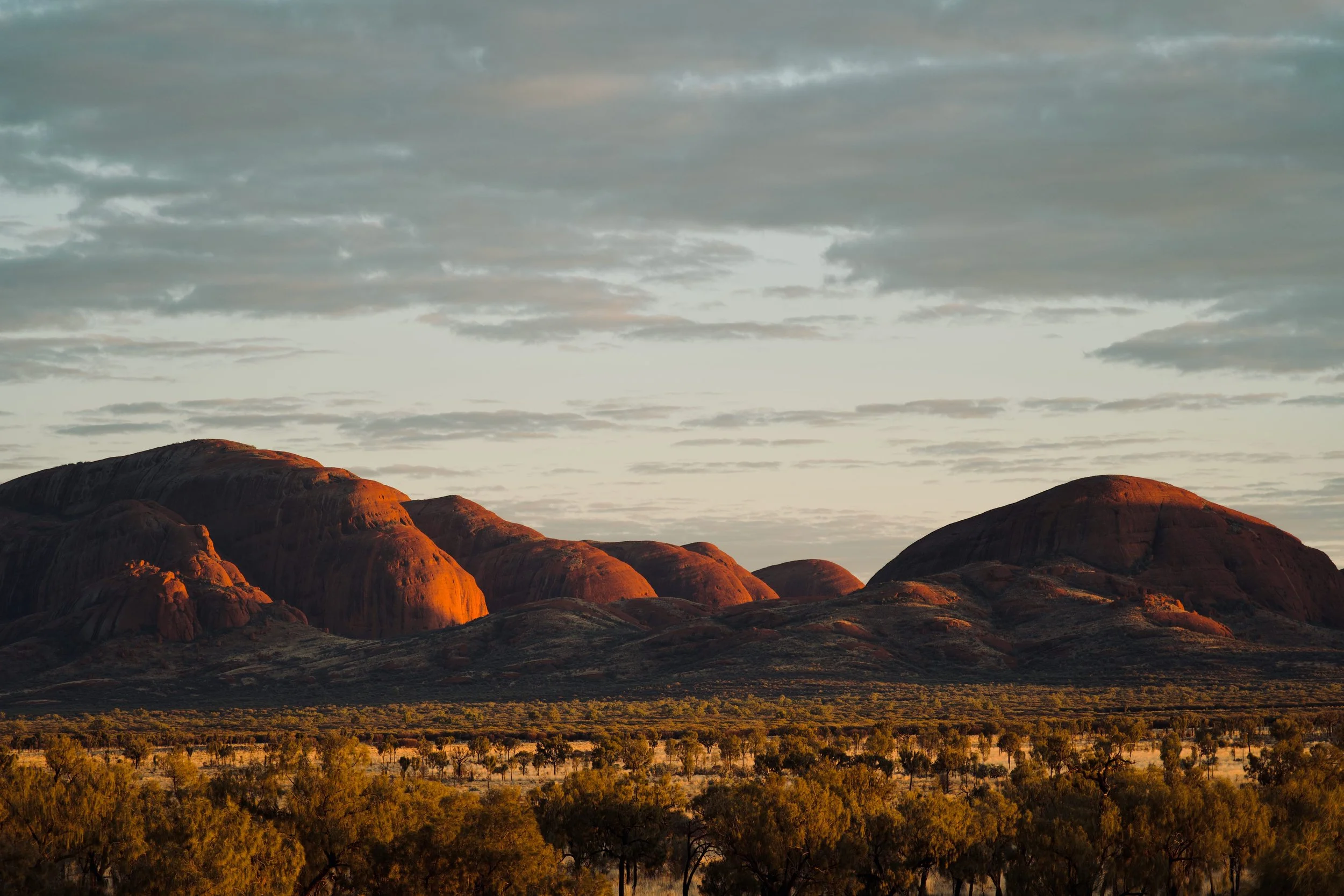
Thirty-six domes wait in the dark, then the light arrives.
Compare fares, pick the fit — all bookings are mobile-voucher and eligible for free cancellation where shown.
5 hr
5 hr
2 hr
| Experience | Duration | Rating | Transfers | Pickup | Small group | Free cancel. | Price | |
|---|---|---|---|---|---|---|---|---|
|
Standard Entry
Most popular
Uluru Sunrise & Kata Tjuta Explorer from Yulara
|
5 hr | ★ 4.5 | ✓ | ✓ | ✓ | ✓ | €128 | Book → |
|
Standard Entry
Kata Tjuta Sunrise Experience with Breakfast
|
5 hr | ★ 4.7 | — | ✓ | ✓ | ✓ | €152 | Book → |
|
Standard Entry
Field of Light Sunrise Experience at Uluru
|
2 hr | ★ 4.6 | ✓ | ✓ | ✓ | ✓ | €83 | Book → |
Worth it for anyone with one desert morning
A kata tjuta sunrise tour trades roughly ninety minutes of sleep for the one window when the 36 domes shift from flat grey to iron-red, and the payoff is genuinely lopsided in your favour. Park gates open at 05:00, and arriving between 05:00 and 06:30 puts you on the dune viewing platform boardwalk with the Valley of the Winds silhouetted behind before the light does its work. Mount Olga, the tallest dome, holds colour longer than anything else on the horizon. Where the maths turns against you: if you already hold the 38 AUD three-day pass and have your own vehicle, self-driving delivers the same spectacle without paying for a seat. Guided kata tjuta sunrise tour tickets pay off for travellers without a car, first-timers who want the Anangu cultural context, and anyone nervous about pre-dawn desert driving with kangaroos on the road.
Bottom line: If you have wheels and confidence, drive yourself; otherwise a guided Kata Tjuta sunrise tour is the cleanest way to see the domes light up.
They complement each other, though most visitors who seek a rugged desert landscape find a kata tjuta sunrise tour more isolating than the popular base viewing areas. Choosing between these red center landmarks often depends on whether you prefer expansive geological panoramas or the immediate scale of a massive monolith.
|
Top pick Kata Tjuta Sunrise |
Uluru Sunrise | |
|---|---|---|
| Terrain difficulty | Rugged and uneven | |
| Crowd density | Moderate | |
| Walking intensity | High | |
| Panoramic vs Iconic view | Panoramic | |
| Park entry requirements | 38 AUD 3-day pass | |
| See tickets & prices |
Verdict: Select the Kata Tjuta sunrise tour if you want to explore complex rock domes, whereas Uluru is the better choice for those prioritizing the classic kata tjuta sunrise tour tickets experience with established infrastructure.
Hand-picked experiences loved by thousands of travelers
5 hours
Free Cancellation
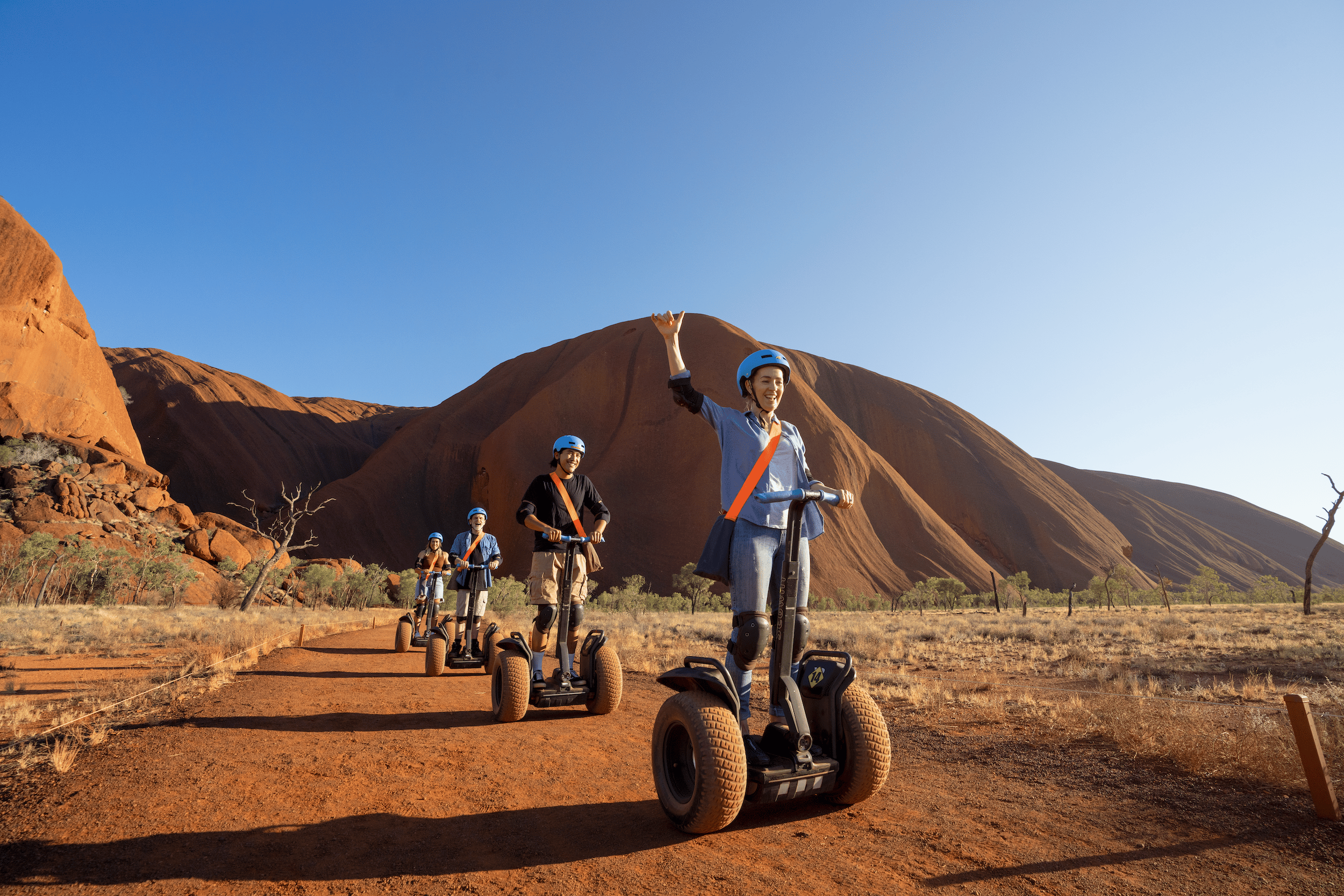
Glide around Australia's iconic red monolith at dawn on a guided Segway experience with hotel transfers
5.5 hours
Free Cancellation
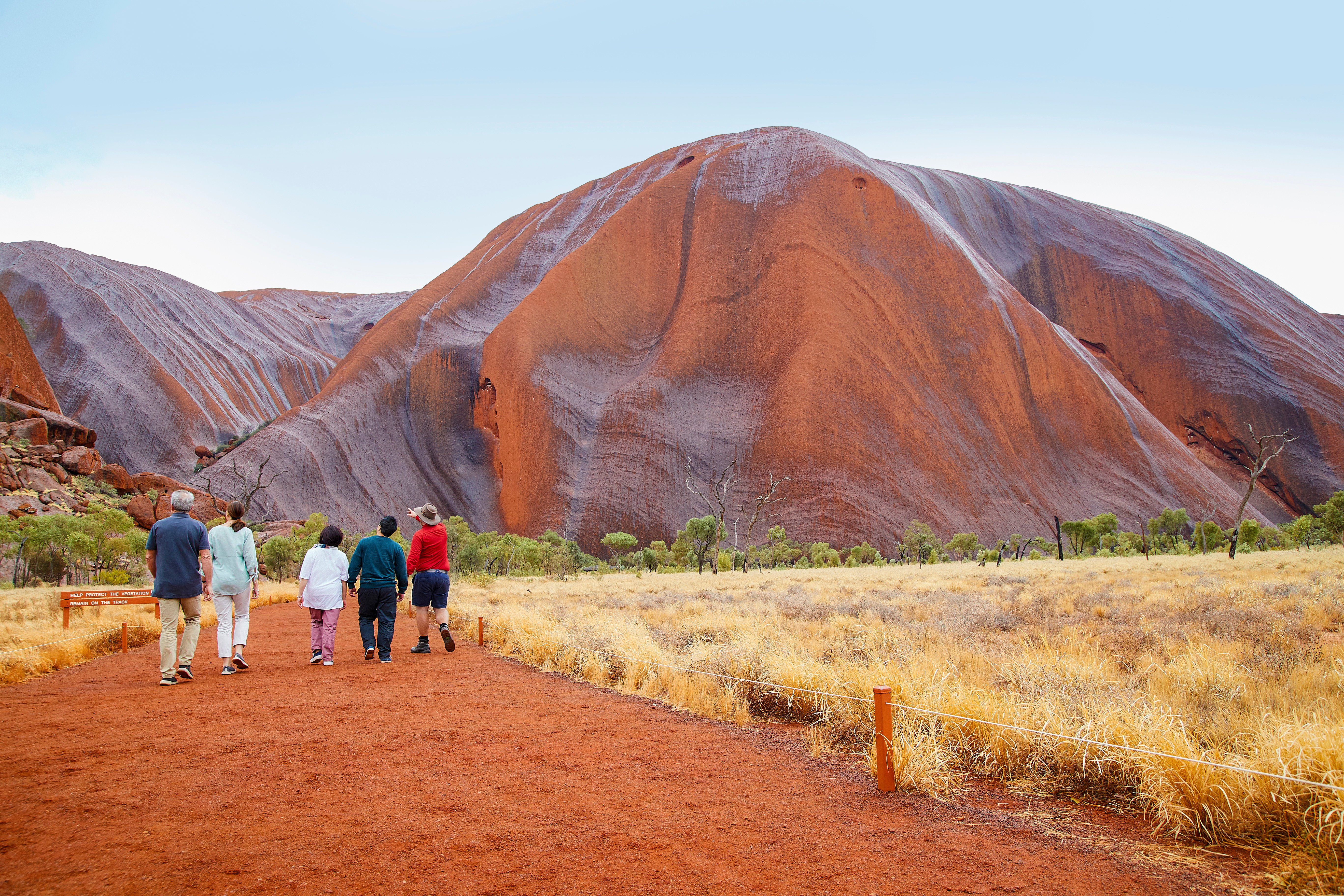
Experience the sacred rock at dawn, walking its full perimeter while learning ancient stories
3 days
Free Cancellation
Camp under the stars while discovering Australia's iconic desert landmarks with expert guides
3 hours
Free Cancellation
Small-group exploration of the ancient 36-dome rock formation with expert interpretation
4 days
Free Cancellation
Multi-day camping expedition through Uluru, Kata Tjuta and Kings Canyon with sunrise viewing
3 hours
Free Cancellation
Witness dawn break over the iconic red monolith and explore sacred waterholes on this intimate group tour
1, 2, or 3 days
Free Cancellation
Explore Australia's Red Centre at your own rhythm with unlimited daily transfers to iconic landmarks
5 hours
Free Cancellation
Begin your morning witnessing dawn break over the Olgas' ancient domes in Australia's Red Centre
Arrive early to watch the sunrise colors over the domes
A moderate walk between the towering conglomerate walls
Learn about the significance of the region to the Anangu
You leave the resort in the dark, usually between 05:00 and 06:30, because that arrival window is what secures a prime position at the dune viewing area before sunrise. The park gates open at 05:00.
You show your 38 AUD three-day pass at the entry station, then drive 50 kilometres west on the sealed road while the horizon stays flat and starless behind you.
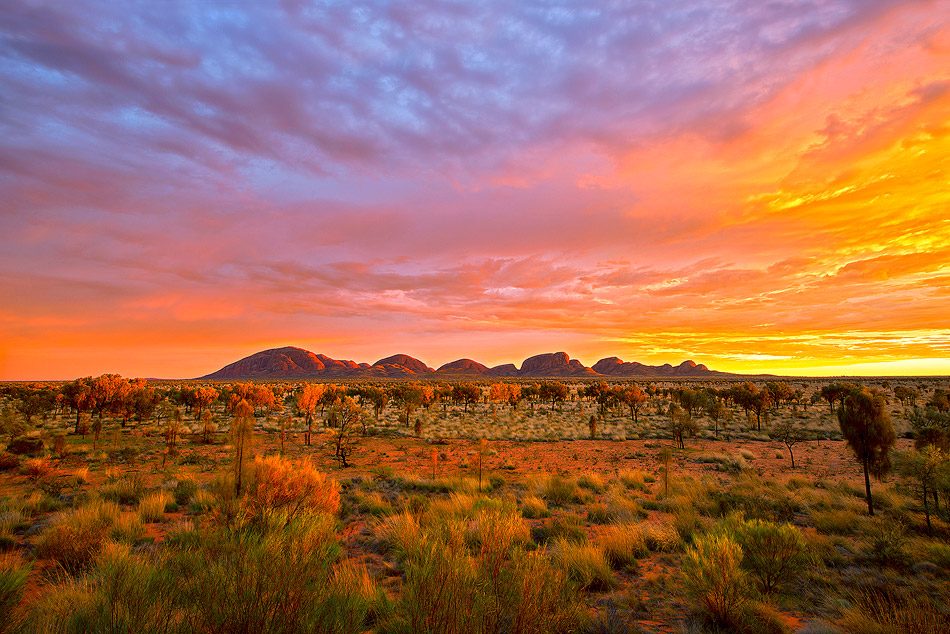
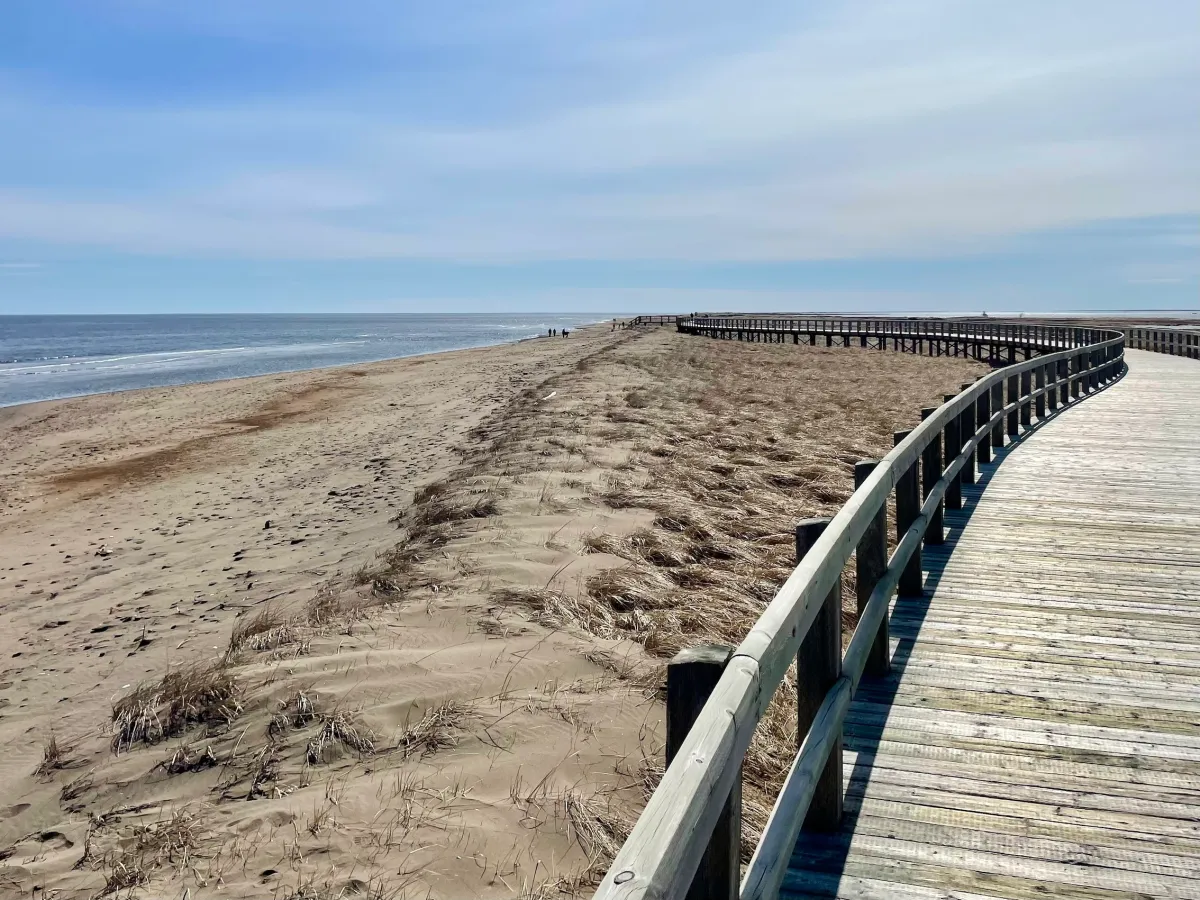
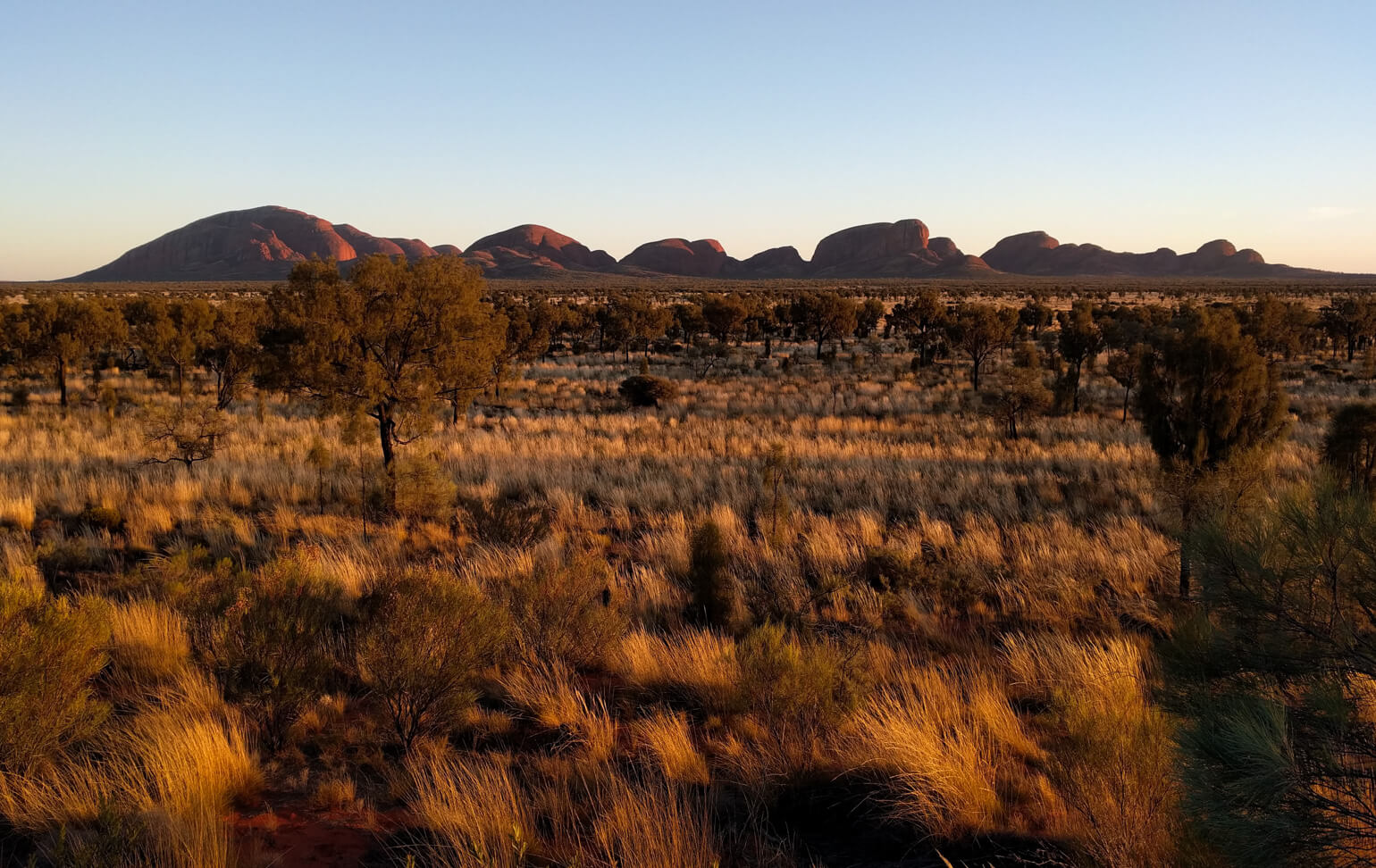
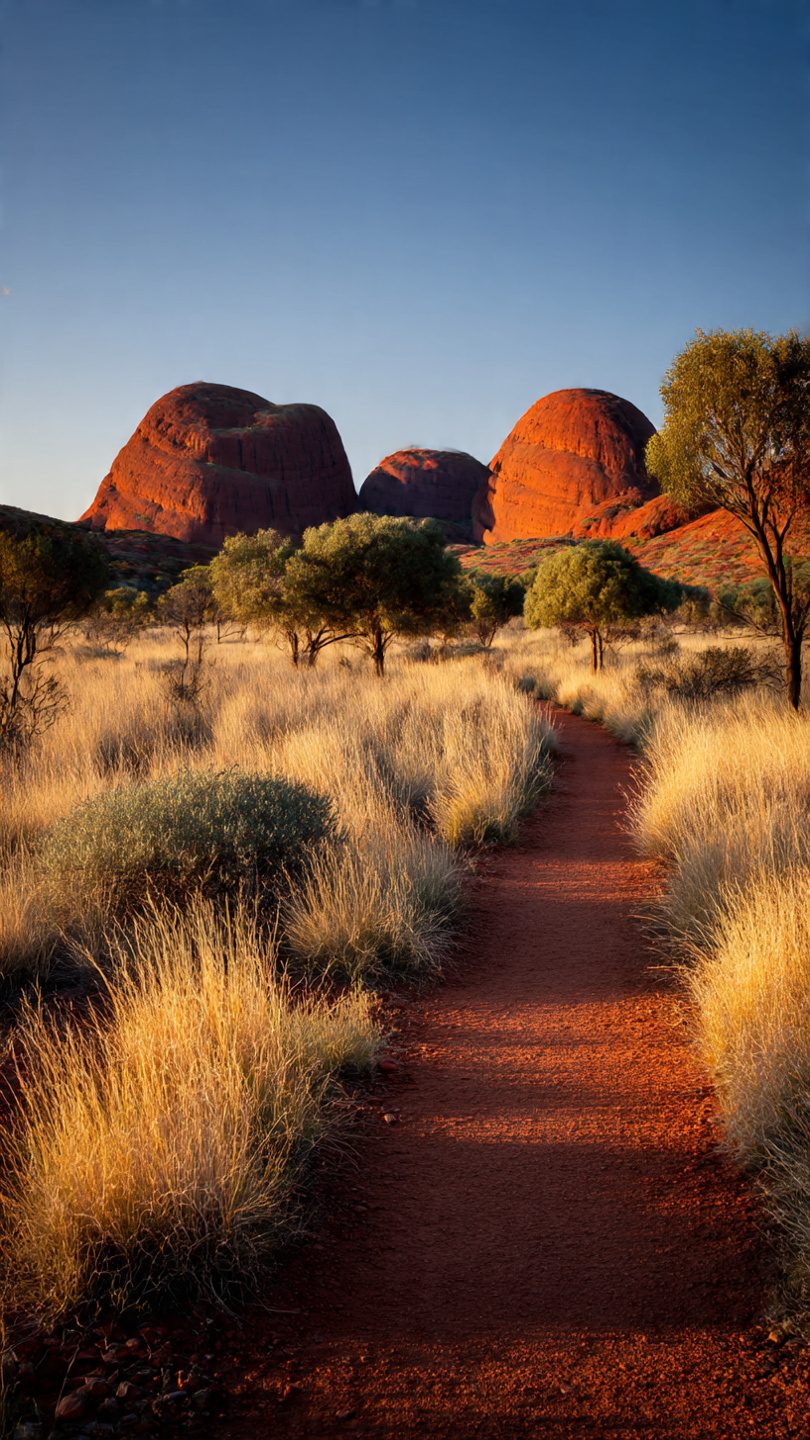
You park. You walk the raised boardwalk — a few hundred metres, no steps of consequence — and you choose a rail. It is cold; in August you will want a jacket even though the day will reach the high twenties. You wait. The domes begin as a grey mass, then separate: one, then four, then the full ridge line. Guides on a seit kata tjuta sunrise tour hand out tea while pointing out Mount Olga at 546 metres, left of centre.
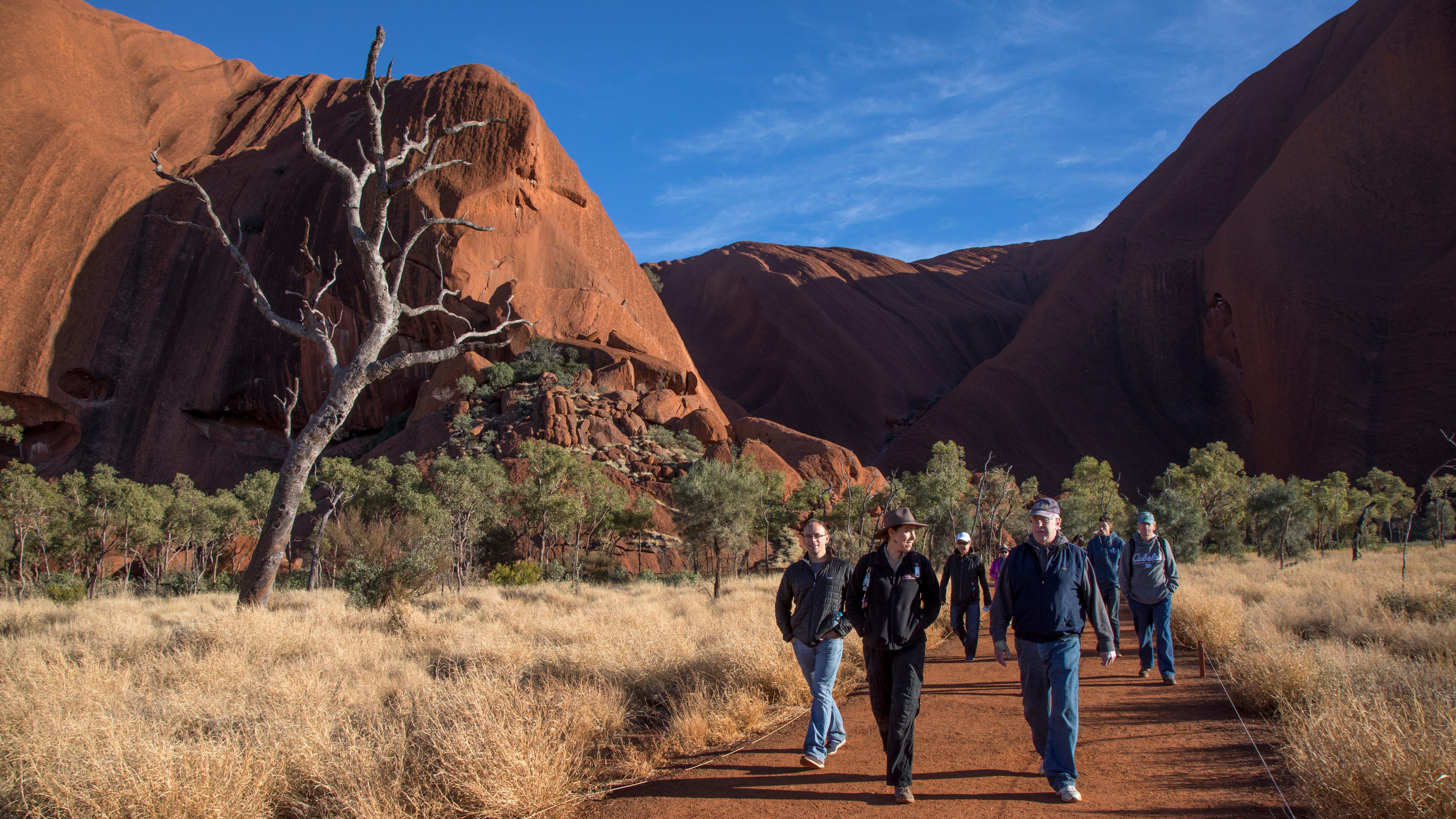
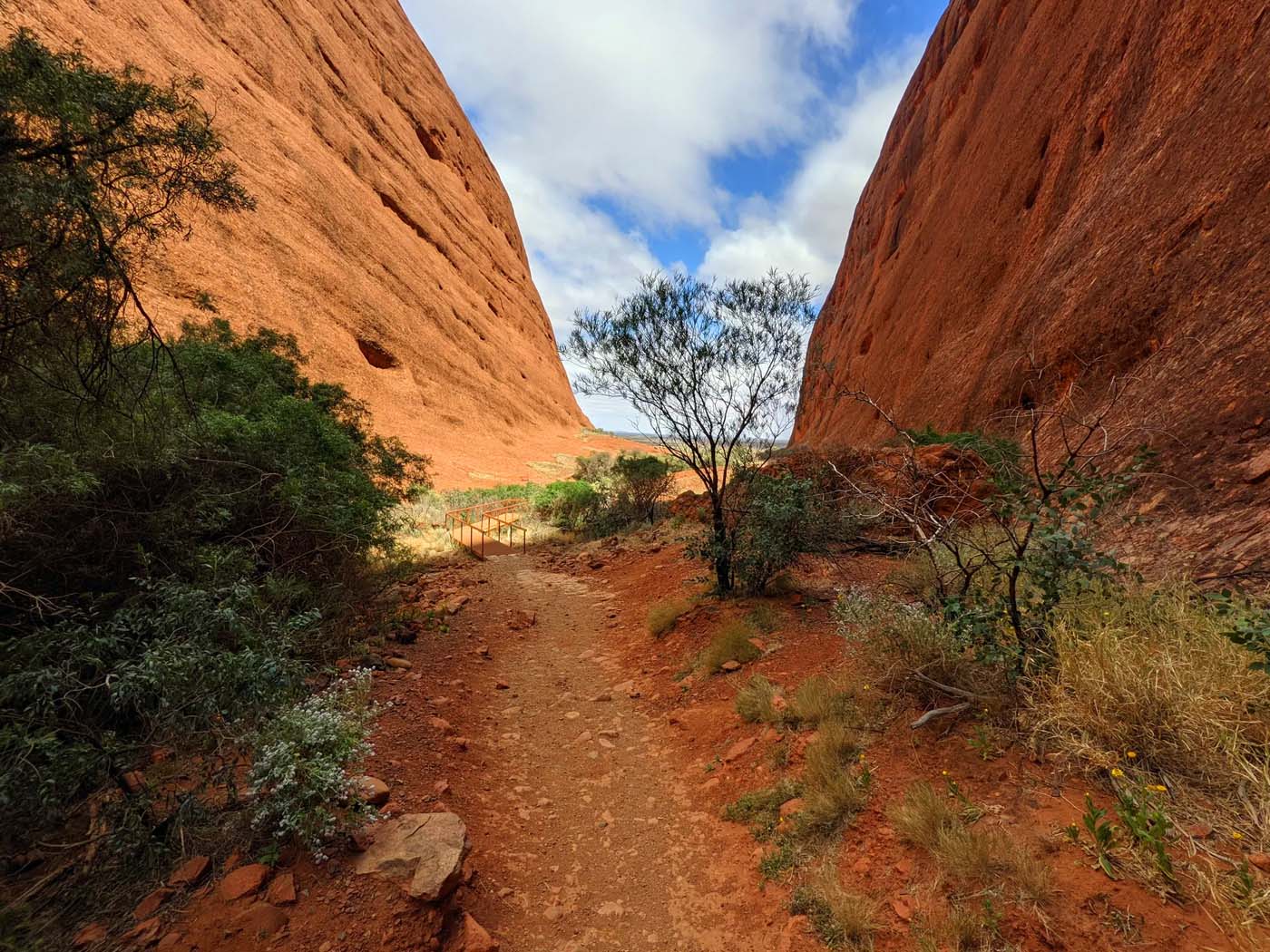
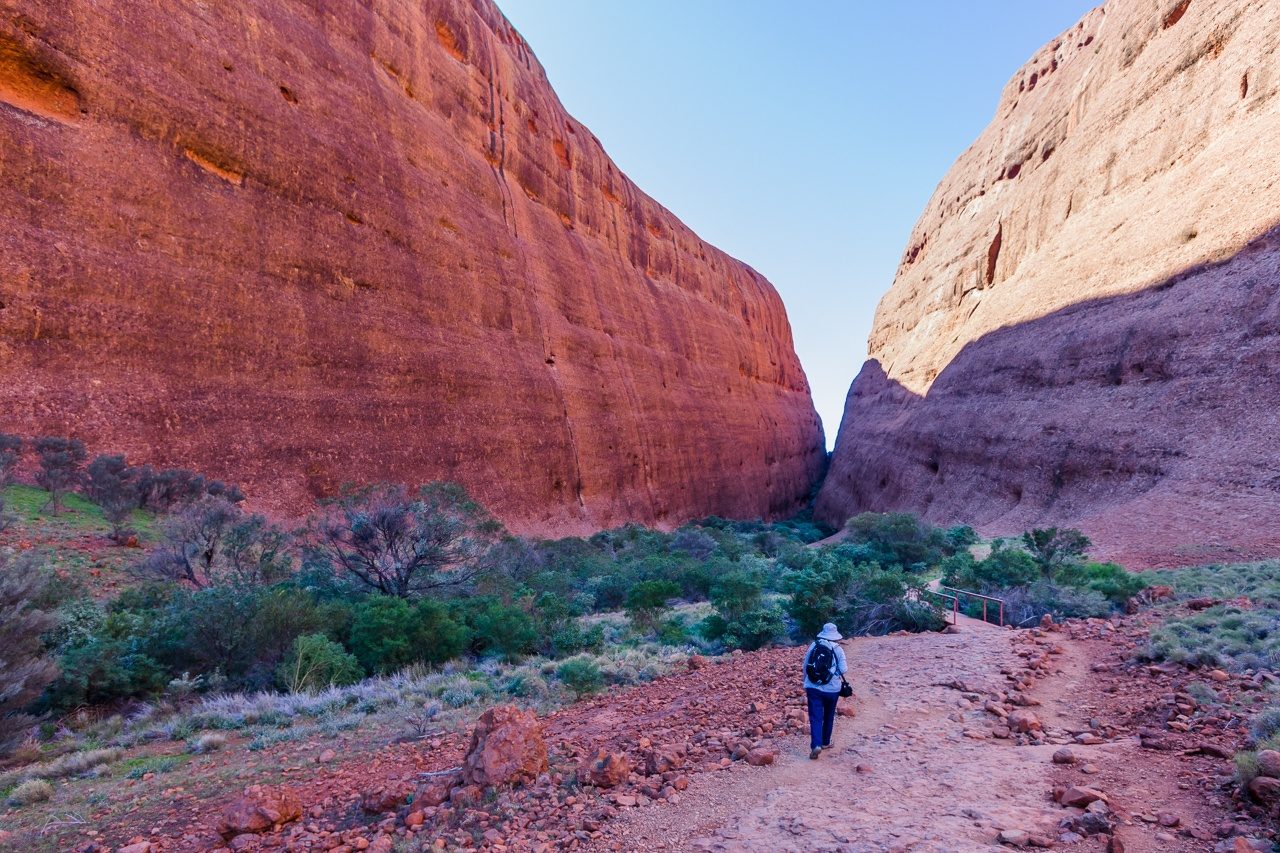
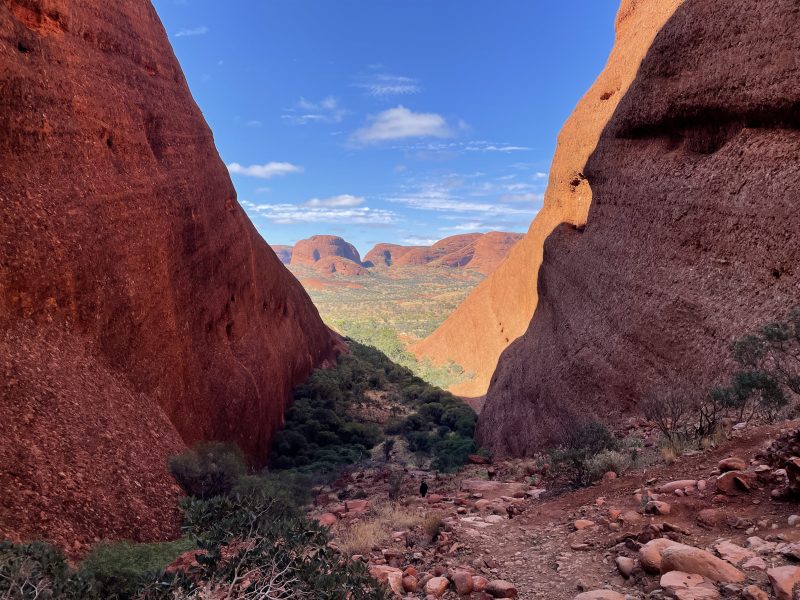
After the light lands, most groups drive fifteen minutes to Walpa Gorge. You enter between two walls, the track rising gently over loose conglomerate for 2.6 kilometres return. You hear wind before you feel it. A kata tjuta sunrise tour typically returns you by mid-morning, sand still in your boots, the park's hours running to 21:00 should you want the same rock at the other end of the day.
All the details about your upcoming adventure in one place
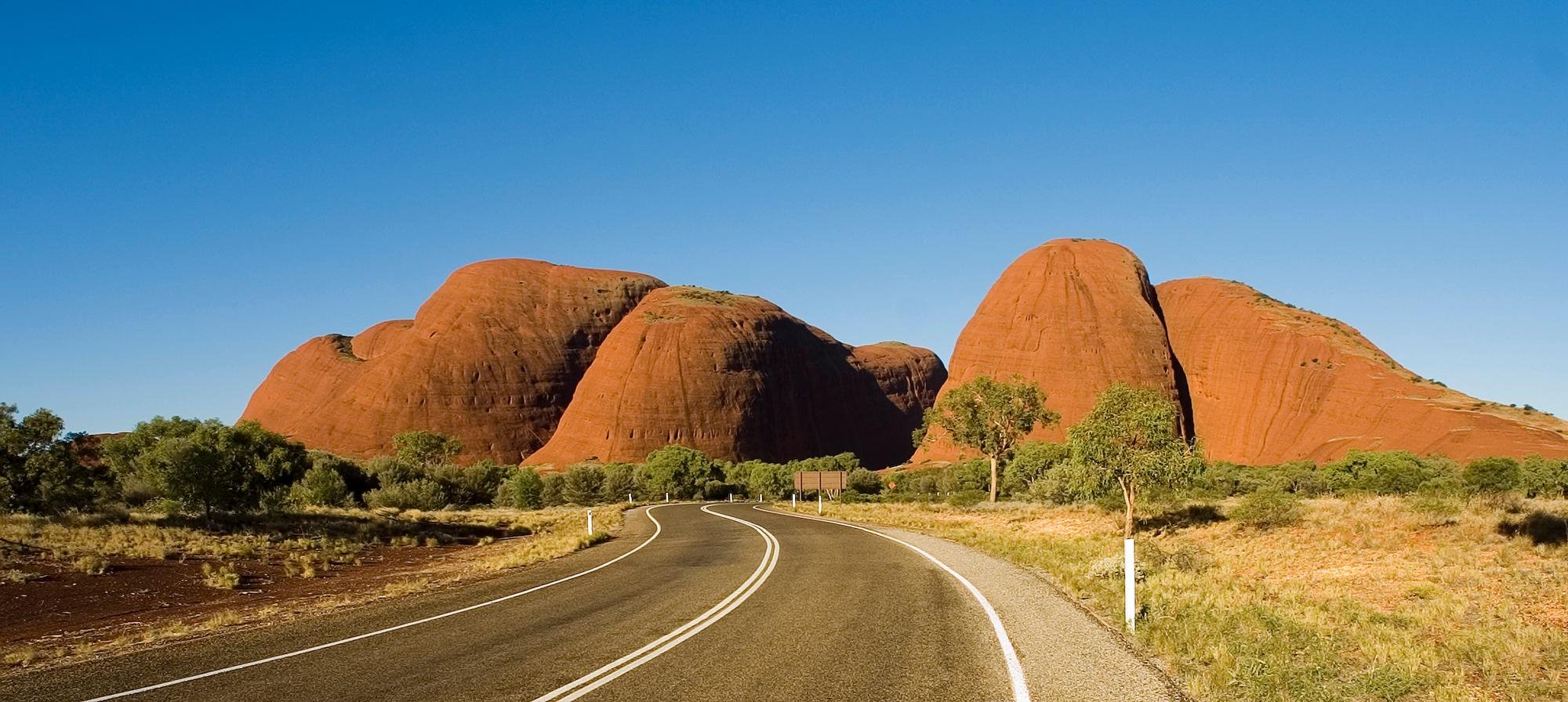
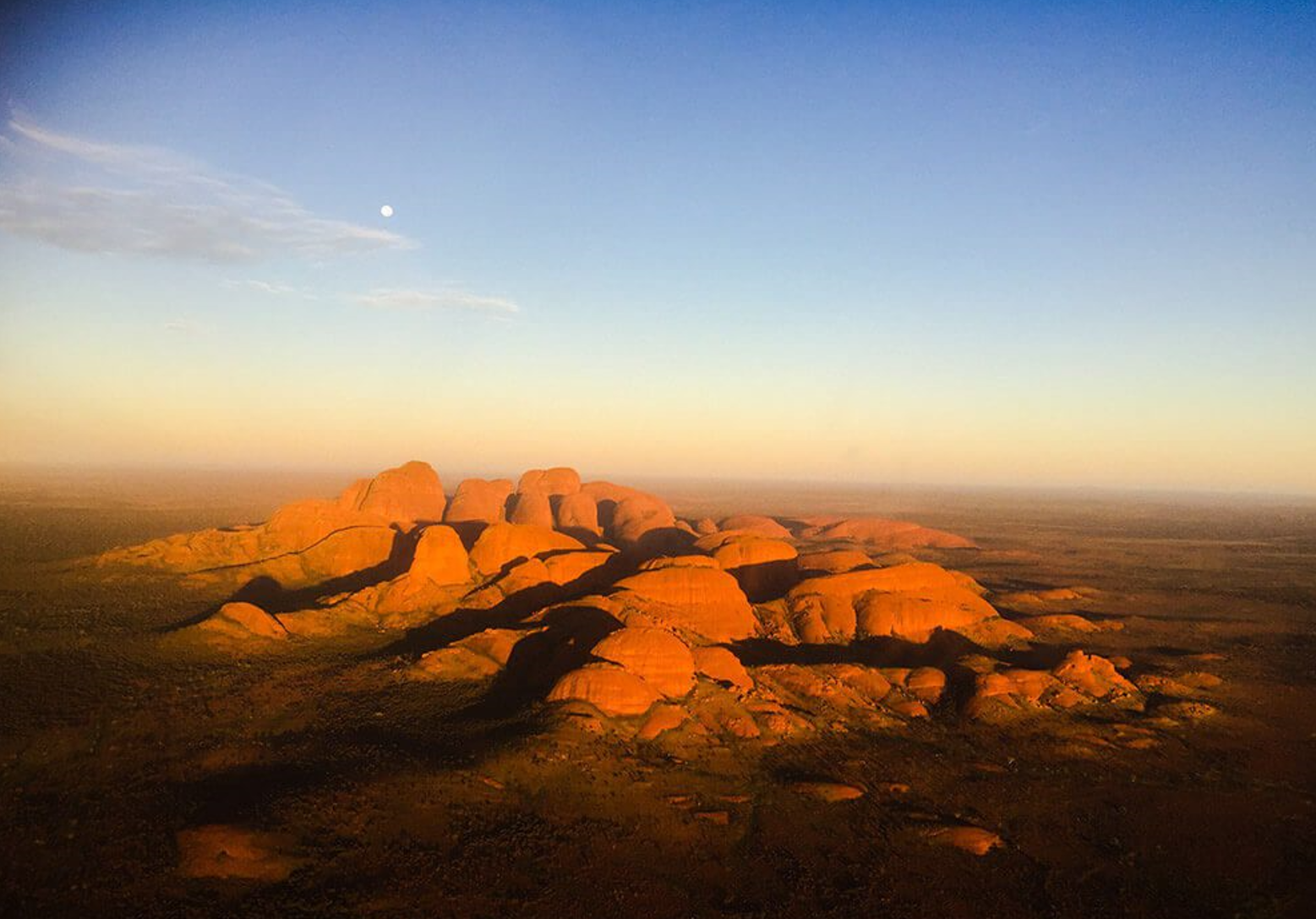
A kata tjuta sunrise tour begins in the dark at the Yulara resort area and reaches the dune viewing platform while the 36 domes of Kata Tjuta still sit in shadow, with Uluru visible across the plain to the east. Guides talk through Anangu connection to this Tjukurpa site, the conglomerate rock that makes these domes geologically distinct from Uluru's sandstone, and the meaning of the name — "many heads" in Pitjantjatjara. Most kata tjuta sunrise tour tickets also include the first section of Walpa Gorge, where the walking track runs between Mount Olga and its neighbouring dome.
Kata Tjuta is older than Uluru's exposed sandstone by a considerable margin, and it is not sandstone at all. The 36 domes are conglomerate — a cemented jumble of granite and basalt boulders, some the size of cars, laid down in an alluvial fan roughly 500 million years ago.
Mount Olga, the tallest dome, rises 546 metres above the plain, nearly 200 metres higher than Uluru.
The name means "many heads" in Pitjantjatjara. For Anangu, the traditional owners, the formation carries Tjukurpa — law, story and ceremony — much of it restricted to initiated men. This is why the domes are read differently from Uluru in the visitor literature: fewer sites are open to interpretation, and guides on a kata tjuta sunrise tour speak carefully about what may and may not be shared. Ernest Giles reached the range in 1872 and named the highest dome for Queen Olga of Württemberg. The dual name Kata Tjuta / Mount Olga was formalised in the 1990s, part of the same shift that returned the freehold title to Anangu in 1985.
The park was inscribed on the UNESCO World Heritage List twice: for natural values in 1987, and again in 1994 for cultural landscape — one of very few sites in the world to hold both. The 38 AUD three-day pass for adults 18+ funds ranger work across that dual listing, and the kata tjuta national park entry fee applies equally to those visiting for a kata tjuta sunrise walk, the Valley of the Winds circuit, or Walpa Gorge.
Geologically, the conglomerate weathers differently from Uluru's arkose. Water exploits the boulder matrix rather than vertical joint lines, which is why the domes are rounded and separated by steep, narrow chasms instead of standing as a single monolith. Those chasms funnel wind — Walpa translates as "windy" — and channel the desert oaks, spinifex and occasional rock figs that survive in the shaded gullies. Black-footed rock-wallabies persist in the higher scree.
Operators have shaped the modern visit around this geology. The dune viewing area, a raised boardwalk on the eastern approach, was built to concentrate foot traffic away from fragile crust; it is where most seit kata tjuta sunrise tour groups and independent uluru kata tjuta sunrise tour visitors gather. A kata tjuta sunrise tour tour is therefore less an ascent than an act of positioning — standing still while 500 million years of cemented rubble turns from grey to violet to ember.

The domes are not one rock but thirty-six, and the light finds each of them separately.
Wear sturdy walking shoes and layers, as desert temperatures can be near freezing before dawn. A hat and sunglasses are essential once the sun rises.
Small daypacks are recommended to carry your water and camera gear. There are no lockers available at the remote viewing platforms.
Tripods are permitted at the dune viewing area, provided they do not obstruct other visitors. Be ready to capture the changing light on the rock formations.
Children are welcome on these desert excursions, but parents should monitor them closely near steep drop-offs. Ensure children stay hydrated and protected from the sun.
The walking trails near the Kata Tjuta viewing areas have varying levels of difficulty. Some paths are compacted earth and may be uneven for wheelchair users.
Most operators include light refreshments, but visitors should carry at least one liter of water. Food consumption is generally restricted to designated picnic areas within the national park.
Opening Hours
05:00–21:00
Address
Lasseter Hwy, Uluru NT 0872, Australia
Park Access
Standard national park entry rules apply
Best arrival
05:00–06:30
Storage
None provided on-site
Navigation
Follow signage for Kata Tjuta dune viewing area
Car · 45 minutes · National park pass required
Drive along Lasseter Hwy from Yulara to the park entrance.
Shuttle · 50 minutes · Fee varies by provider
Book a dedicated sunrise shuttle from major resort hubs.
Full refunds are typically available if cancelled outside the operator's specified window, usually 24 to 48 hours prior. Please note that the 38 AUD entrance fee for Uluru-Kata Tjuta National Park is a separate government charge that may be non-refundable.
Recommended time
4-5 hours
To secure a prime position at the dune viewing area before sunrise, visitors should follow the best arrival window: 05:00–06:30. Completing a kata tjuta sunrise tour requires accounting for both the dawn observation period and the subsequent hike through the red rock domes. Crowds disperse significantly after the initial light show, making late morning ideal for those seeking a quieter experience with these iconic central Australian landmarks. Securing your kata tjuta sunrise tour tickets in advance ensures smooth entry to the national park, where the 38 AUD entrance fee covers your 3-day access.
Crowd levels through the day
Weather · crowds · average price — dots go green to amber to red as each metric rises.
Cooler temperatures make this the most comfortable time for a kata tjuta sunrise tour. Expect clear skies and mild days.
Drink plenty of water before and during your walk. Dehydration can occur rapidly in the arid climate even in winter.
Dress in layers to adjust for the significant temperature drop before sunrise and the heat that follows.
Position yourself along the northern edge of the boardwalk to capture the first light hitting the sedimentary rock domes. This designated platform provides an unobstructed wide-angle view of the landscape during a kata tjuta sunrise tour.
Real experiences from real travelers
We were at the dune viewing area well before first light and the temperature was somewhere near zero, so bring more layers than you think. Watching the domes shift from grey to that deep rust colour was the part nobody photographs well. Our guide from the kata tjuta sunrise tour explained the conglomerate rock and why the 36 domes weathered so differently to Uluru.
The scale only registered once we walked into Walpa Gorge and the walls just kept going up. Spinifex everywhere, very quiet apart from a few birds. I had expected something like Uluru and it is completely different rock and completely different feeling.
Did the dawn viewing then continued to the Karu lookout, which was the highlight for me. The morning light comes in sideways between the domes and the whole valley turns orange for maybe twenty minutes. Our small-group Olgas tour kept the pace comfortable and there was plenty of time to just sit.
Pickup was uncomfortably early and I dozed most of the drive, though the sky on arrival made up for it. The viewing platform was busier than expected and I had to move a few times for a clear line of sight. Kata Tjuta sunrise tour tickets were straightforward to arrange through the hotel desk.
Our guide spoke about the cultural significance of Kata Tjuta to the Anangu and which areas are restricted, which changed how I looked at the place. The red sand, the desert oaks, the cold air, all of it stayed with me. Practical note: closed shoes, the ground is rocky and uneven.
I almost skipped this and only booked because a friend insisted. Standing there as the sun cleared the horizon and lit Mount Olga first, then the smaller domes in sequence, was the single best thirty minutes of our trip. There are several kata tjuta sunrise tour tours running and ours had only twelve people, which made a difference.
What surprised me most was the silence out on the plain before dawn, broken only by wind through the spinifex. The domes look soft from far away and then you get close and see they are packed with boulders the size of cars. Bring a headtorch, the walk from the car park is dark.
We booked a second morning after the first because the sky was overcast on day one. Second attempt was cloudless and the colour on the western domes was extraordinary. Our kata tjuta sunrise tour guide pointed out where Uluru sits on the horizon, which put the whole landscape in context.
Warm morning in early spring and the flies arrived with the sun, so a head net is not a joke out here. The gorge walk was straightforward and shaded, and the rock ferns down near the creek bed were unexpected. A solid Uluru-Kata Tjuta landmarks experience overall.
Mid-winter meant frost on the spinifex and a very cold wait, but also the clearest sky we had all week. The transition from violet to orange across the domes took longer than I anticipated and I stopped taking photos halfway through. Booked a kata tjuta sunrise tour tour with a small operator and it ran exactly on time.
Everything you need to know for your journey
The park is open daily from 05:00–21:00, allowing for early morning entry. Always aim to reach the viewing area between 05:00–06:30 for the best experience.
Yes, booking your kata tjuta sunrise tour tickets in advance is highly recommended to secure a spot. You will also need to pay the 38 AUD park entrance fee for access.
While many areas of the national park are accessible, some trails involve uneven terrain. Please check with your specific kata tjuta sunrise tour provider regarding mobility support.
Prohibited items include drones, alcohol, and glass containers. For a full list, refer to the site guidelines for your kata tjuta sunrise tour.
Yes, photography is encouraged during your kata tjuta sunrise tour. Please be mindful of other visitors and stay on designated paths.
The winter months of June through August provide the best weather for a kata tjuta sunrise tour. This minimizes the risk of extreme heat during your walk.
Most operators provide light refreshments, but you should bring your own water. Always carry at least one liter for your kata tjuta sunrise tour.
You can reach the location by car or pre-booked shuttle along the Lasseter Hwy. Follow signs for the national park entry to begin your kata tjuta sunrise tour.
Yes, children are welcome on a family-friendly kata tjuta sunrise tour. Ensure they have adequate protection from the sun and hydration.
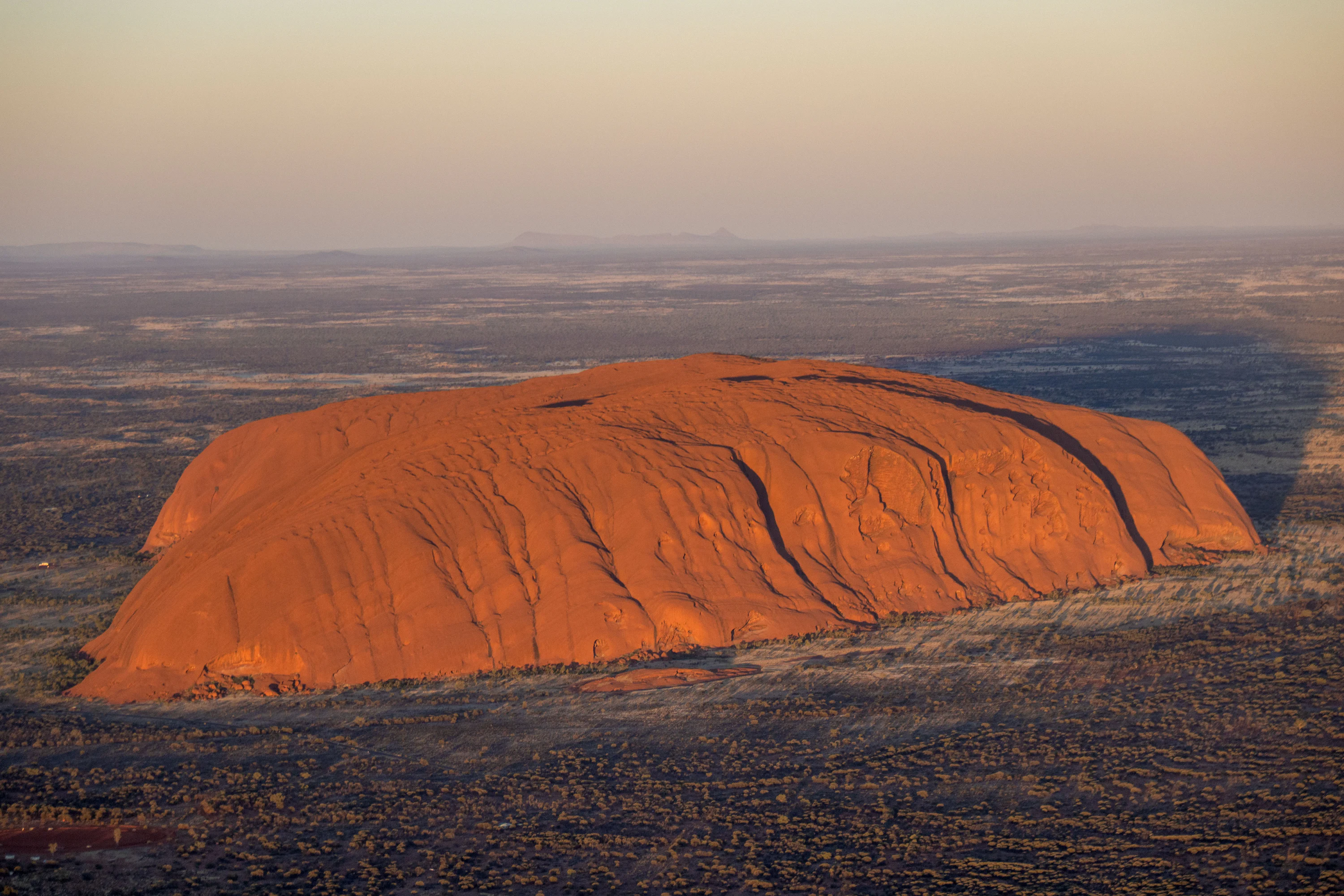
A massive sandstone monolith located in the heart of the park.
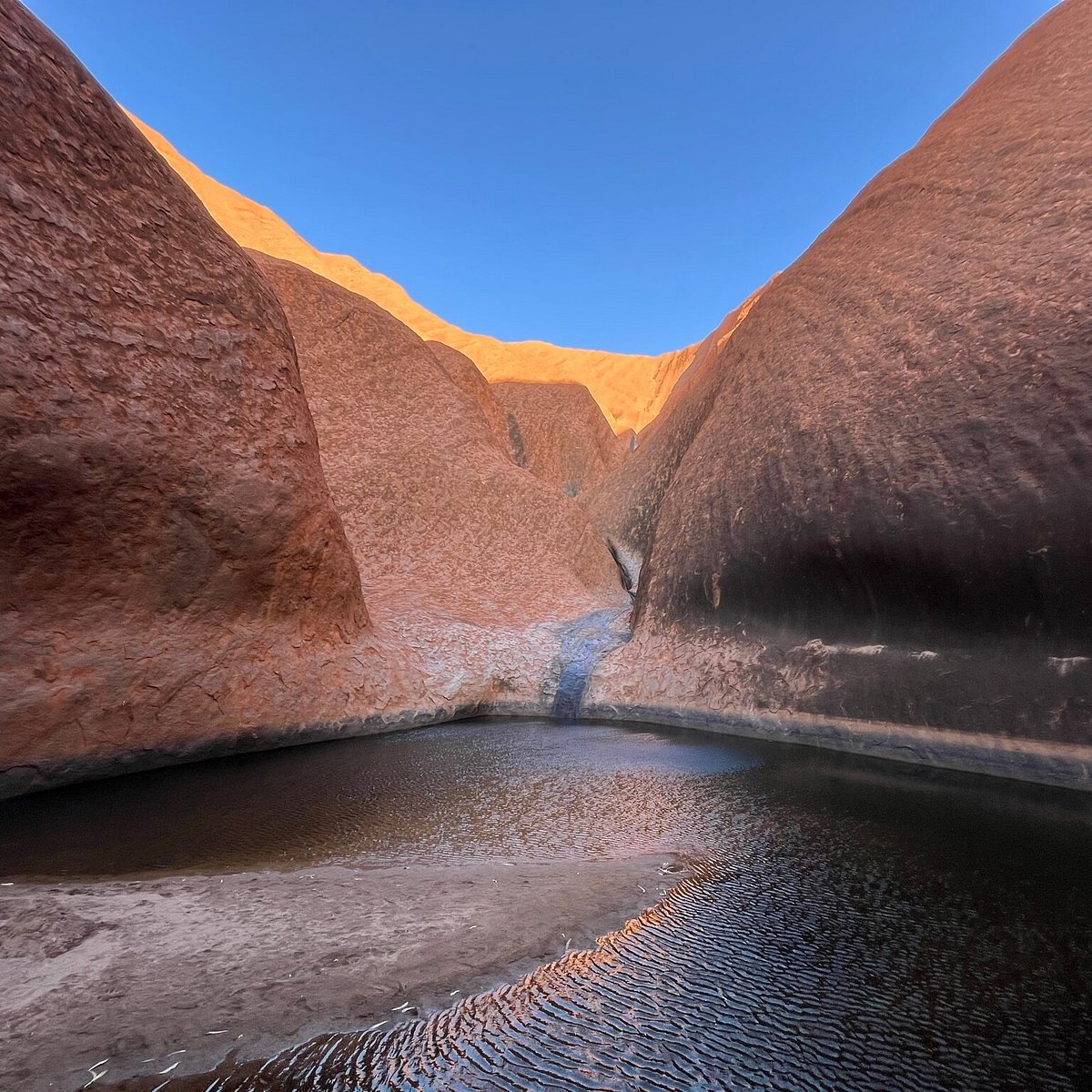
A tranquil waterhole at the base of Uluru.
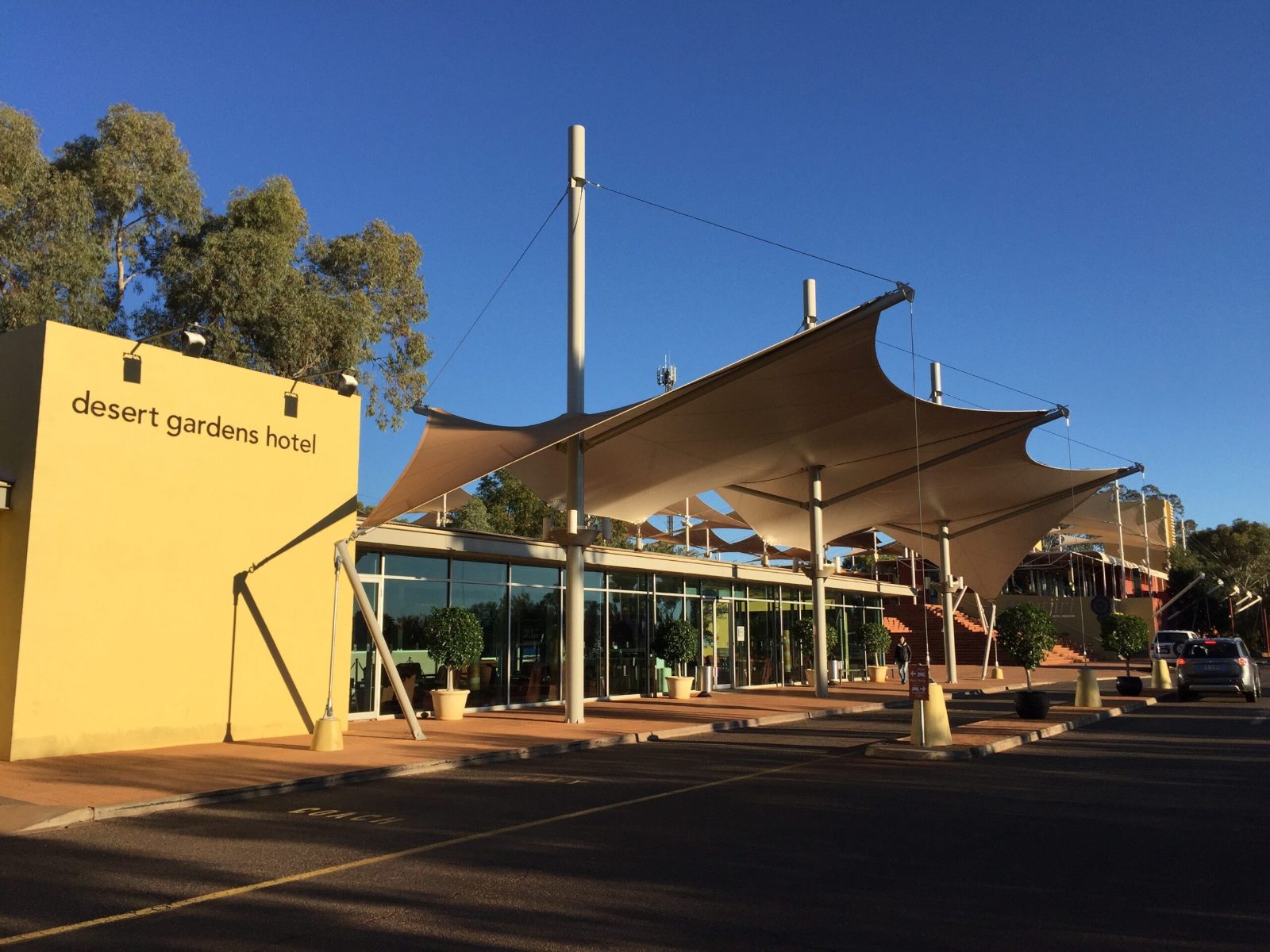
Located within the Ayers Rock Resort.
Join thousands of happy travelers who have discovered this incredible experience
Book Your Experience Now